
February 20, 2019
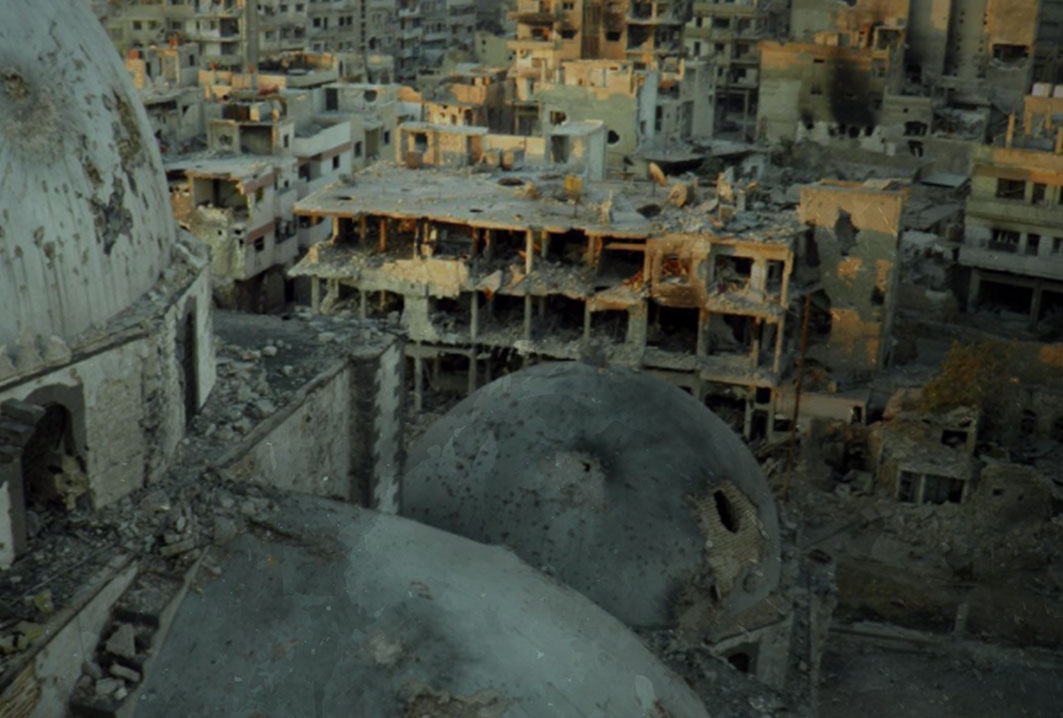
The residents of Homs live amid security concerns since the opposition armed groups accepted a Russian brokered agreement in May 2018, to leave territories they hold near the province to the Government of Syria (GoS). In addition to concerns over the government’s security services, economic and livelihood problems soon emerged for the populations in Homs.
In this report, the Syrian Civic Platform monitored the situation of Homs residents as well as those who have been displaced to the north. In addition, the SCP monitored the commitment of the agreement’s sponsoring parties to their guarantees and promises.
Introduction
Homs, like other provinces in Syria, has witnessed severe violence since the outset of the popular movement in 2011. In some cases, violence in Homs and its environs were sectarian-driven due to ethnic and sectarian diversity in the province.
Due to violence, tension and military operations, large numbers of people were displaced in the province. In addition, there was also forced displacement due to agreements between the GoS and opposition armed groups. As a result of these agreements 35,648 people were displaced to the north of Syria according to statistics by the Support Coordination Unit. The majority of the displaced population went to several areas in Syria, including Idlib province as well as the towns of Jarabulus, Afrin, and Azaz.
Problems affecting Homs residents
Civilians who remained in their areas:
- The vast majority of Homs residents who remained in their areas are unemployed and without any economic resources. Male breadwinners who are able to work are either forced or notified that they must join the compulsory military service or reserve service, leading to an additional burden on families.
“S.A is a young woman and a mother of two children. Her husband was recruited into compulsory military service, forcing her to do types of work usually off limits to women. “
- Homs residents are afraid to leave their areas for fear of arrest, since they have little information about the recent Russian-sponsored agreement reached between the GoS and the opposition armed groups.
- Arrests by the GoS security services are still ongoing.
- There is a deterioration of basic services; electricity cuts off for more than 12 hours a day and water is being pumped only one or two days a week in most areas of Homs.
- Residents of Homs and its environs suffer from high prices and low income. The prices of one kilogram of bread exceeds 500 SYP; sugar 400 SYP; olive oil 2,500 SYP. The price per liter of diesel is 600 SYP, and a gas cylinder is 20,000 SYP, if available. Even relatively cheap wood is not available.
“Abu Saleh, a civilian from Homs province said that the living conditions as well as the service situation is miserable. People face great difficulties in securing bread, drinking water and heating fuel, due to their scarcity, high prices, and the lack of appropriate income to pay for them.”
Civilians who left their areas to northern Syria:
- Those who were displaced towards northern Syria suffer from a lack of employment; a lack of support from international and local organizations, and an unstable security situation. They also face difficulties in finding houses if there are any, while those that are habitable have a high rent estimated at 150 – 200 USD. This a very high price for the displaced.
“Abu Khaled, a man who was deported on the last convoy from Homs and ended up in a village near Afrin said he has been looking for a job since his arrival. But job opportunities are almost non-existent, and he is rejected when jobs are with the response that he doesn’t belonging the region.”
- Many of the displaced people have taken refuge in the camps in Afrin, such as the Jenderees Camp, while others live in rented homes, or homes that have been or abandoned by their owners due to the recent military escalation in Afrin.
In addition, the Syrian Civic Platform has been monitoring the situation in Homs after the Russian-sponsored agreement and identified the following:
- The terms of the Russian-sponsored agreement have not been adhered to, nor have Russia committed to their implementation. This indicates that the Homs’ agreement as well as other recent agreements are only to protect the interests of the negotiating parties without regard to civilians.
- The situation of displaced people inside and outside Homs is similar to that of Syrians in other provinces. This situation continues to deteriorate making civilians a victim of extremism and imposes further complications on the social situation in all Syrian regions. It is therefore essential that donor organizations and governments consider taking concrete steps to alleviate civilian suffering and improve their living conditions.
- Finally, the Syrian Civic Platform stresses that the political solution is the cornerstone in solving all the problems of Syrian society.